Integrating a Realistic 3D Colorful Push Pin Set into Your Visual Workflow
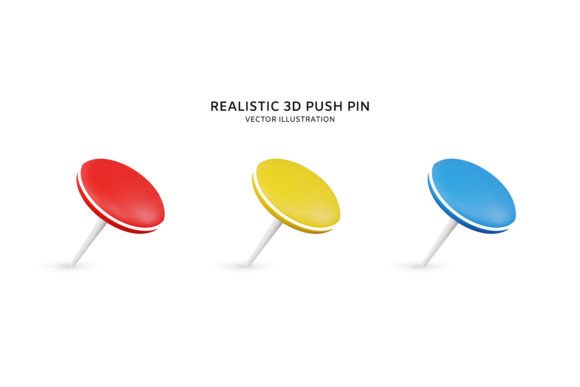
In the realm of digital design and content creation, small details often dictate the perceived quality of the final product. Whether you are designing an educational infographic, organizing a mood board for a client, or creating engaging social media graphics, the assets you choose serve as the building blocks of your visual narrative. A Realistic 3D Colorful Push Pin Set is more than just a decorative element; it is a functional tool that bridges the gap between flat design and tangible, interactive aesthetics. By incorporating these high-quality vector illustrations into your projects, you add depth, hierarchy, and a sense of organization that resonates with viewers on a subconscious level.
Understanding how to effectively utilize this asset requires looking beyond its immediate visual appeal. It involves recognizing where it fits within your broader creative process, from initial planning to final export. This guide explores the practical implementation of these push pins, ensuring you maximize their utility across various professional and personal workflows.
The Strategic Value of Visual Anchors
Push pins have long been associated with mapping, brainstorming, and prioritization. In a physical office, a corkboard covered in notes and pinned documents represents active work in progress. Translating this concept into the digital space allows creators to evoke feelings of productivity, planning, and structure. When you use a Realistic 3D Colorful Push Pin Set, you are leveraging established visual metaphors. A pin marking a location on a map instantly communicates "destination" or "focus." A pin holding a note suggests importance or urgency.
For marketers and educators, this symbolic power is invaluable. It helps guide the viewer’s eye to critical information without relying solely on text. The three-dimensional aspect of these assets adds a layer of realism that flat icons often lack. This realism creates a tactile experience, making digital content feel more grounded and accessible. However, to achieve this effect, the quality of the asset is paramount. Low-resolution images pixelate when scaled, breaking the illusion of realism. This is why working with vector files is essential for maintaining professional standards.
Understanding the File Formats: EPS and JPG
When you acquire this specific set, you receive two distinct file types: one EPS 10 file and one JPG file. Understanding the difference between these formats is crucial for efficient workflow integration. The JPG file is a raster image, meaning it is composed of pixels. It is ready to use immediately in programs like Microsoft Word, PowerPoint, or basic photo editors. You can drag and drop it into your document, resize it within reasonable limits, and start working. This format is ideal for quick tasks, presentations, or web use where editing is not required.
However, the true power of this asset lies in the EPS 10 vector file. Vector graphics are defined by mathematical paths rather than pixels. This means they are infinitely scalable. You can shrink a push pin to the size of a favicon or enlarge it to cover a billboard without any loss in quality. The edges remain crisp, and the colors stay vibrant. For professionals using Adobe Illustrator, CorelDRAW, or other vector-based software, the EPS file is the primary tool. It allows you to separate elements, change colors, and modify shapes to fit your specific brand guidelines or design needs.
Workflow Integration and Practical Implementation
Integrating these push pins into your projects should be a seamless part of your design phase. Here is how you can incorporate them into different stages of your workflow:
Pre-Production and Planning
Before you begin a major project, such as a marketing campaign or an educational course, you likely engage in brainstorming. Digital mood boards and strategy maps benefit greatly from realistic assets. Use the colorful push pins to categorize ideas. For instance, use red pins for urgent tasks, blue for research, and green for approved concepts. Because the files are vectors, you can easily recolor them to match your project’s color palette. This consistency helps maintain a professional look even in internal documents.
Content Creation and Design
During the actual creation of graphics, the push pins serve as focal points. If you are designing an infographic about travel destinations, place a pin on each location mentioned. The 3D effect adds depth, making the map pop off the screen. For bloggers and publishers, these assets can break up long sections of text. A pin holding a quote or a key statistic draws attention and improves readability. Since the set includes multiple colors, you can use color coding to indicate different categories of information, enhancing the user’s ability to scan and digest content quickly.
Post-Production and Quality Control
Before finalizing any design, perform a quality check. Ensure that the shadows and highlights on the 3D pins align with the light source in your overall composition. Inconsistent lighting can make even high-quality assets look out of place. If you are using the EPS file, verify that all elements are properly grouped and that no stray anchor points remain. This attention to detail ensures that the final output looks polished and intentional.
Editing and Customization Tips
To fully leverage the Realistic 3D Colorful Push Pin Set, you should be comfortable with basic vector editing. If you need to edit something, separate elements, or remove a specific part, use a vector editor like Adobe Illustrator or CorelDRAW. Here are some practical tips for customization:
- Color Matching: Open the EPS file and select the individual components of the pin. Use the eyedropper tool to sample colors from your brand palette. This ensures that the pins integrate seamlessly with your existing design elements.
- Element Separation: Sometimes, you may only need the head of the pin or just the shadow. Ungroup the vector elements to isolate specific parts. This flexibility allows you to create custom compositions that standard clipart cannot offer.
- Shadow Adjustment: The realism of the 3D effect comes from the shadow. You can adjust the opacity or blur of the shadow to match the background of your project. A softer shadow works well on light backgrounds, while a sharper shadow might be needed for high-contrast designs.
Compatibility and Long-Term Use
One of the significant advantages of investing in high-quality vector assets is their longevity. Unlike trend-dependent graphics, realistic push pins are timeless tools for organization and emphasis. They remain relevant across various design trends because they mimic real-world objects. Furthermore, the EPS 10 format is widely compatible with most modern design software. This ensures that you can use these files regardless of updates to your design suite or changes in your tech stack.
For small business owners and freelancers, building a library of versatile assets like this saves time in the long run. Instead of searching for new icons for every project, you have a reliable, editable resource at your fingertips. This efficiency translates to faster turnaround times and consistent branding across all your materials.
Enhancing User Engagement
Ultimately, the goal of using visual assets is to enhance communication. A Realistic 3D Colorful Push Pin Set helps achieve this by adding a layer of interactivity and focus to your content. Whether you are highlighting a key feature in a product demo, marking important dates on a calendar graphic, or organizing complex data on a chart, these pins provide a clear visual cue. They help users navigate your content more effectively, leading to better engagement and understanding.
By treating these assets as integral parts of your design system rather than afterthoughts, you elevate the overall quality of your work. Remember to plan their placement, customize them to fit your context, and ensure they align with your lighting and perspective. With proper implementation, these simple yet powerful tools can significantly impact the clarity and appeal of your visual communications.