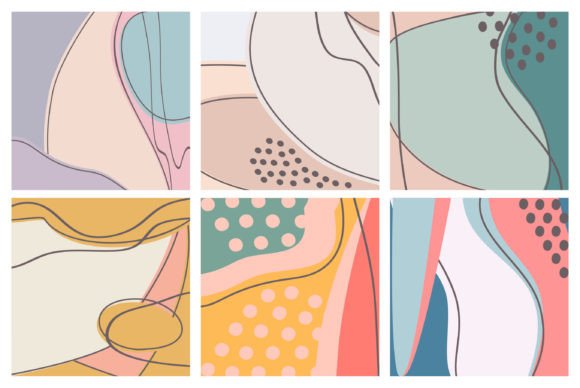
Minimal Geometric Abstract Backgrounds: Elevating Visual Communication
In the fast-paced world of digital design, clarity is king. As attention spans shorten and screen real estate becomes more competitive, designers and content creators are increasingly turning to minimal geometric abstract backgrounds to convey sophistication without clutter. These designs strip away the unnecessary, focusing on clean lines, simple shapes, and balanced compositions to create a visual foundation that supports rather than overwhelms the primary message.
Whether you are crafting a social media story, designing a party invitation, or building a corporate presentation, understanding the utility of these modern template vector illustrations can transform your graphic design workflow. This article explores the essence of minimal geometric aesthetics, their practical applications, and how they serve as a versatile tool for professionals and creators alike.
The Essence of Minimalism in Geometry
At its core, minimalism is about subtraction. It is the art of removing elements until only the essential remains. When combined with geometry—the study of points, lines, surfaces, and solids—the result is a design language that is both universal and timeless. Minimal geometric abstract backgrounds rely on fundamental shapes such as circles, triangles, squares, and polygons. However, it is not merely the presence of these shapes that defines the style; it is their arrangement, spacing, and interaction with negative space.
Unlike complex illustrations that demand immediate cognitive processing, geometric minimalism allows the viewer’s eye to rest. It provides structure. For a business owner or a marketing professional, this translates to better readability and higher engagement rates. When a background is too busy, the text gets lost. When it is too plain, it may feel sterile. The sweet spot lies in the subtle interplay of geometric forms that guide the eye naturally toward the focal point.
Why Choose Vector Illustrations?
A critical component of working with these backgrounds is the format. Most high-quality minimal geometric assets are created as vector illustrations. Unlike raster images (such as JPEGs or PNGs), vectors are based on mathematical equations rather than pixels. This means they can be scaled infinitely without losing quality.
- Scalability: Use the same design for a tiny Instagram icon and a massive billboard without pixelation.
- Editability: Colors, shapes, and line weights can be adjusted easily to match brand guidelines.
- File Size: Vectors are often lighter in file size, leading to faster loading times for websites and apps.
For creators who need flexibility, a modern template vector illustration set is an invaluable resource. It allows for rapid iteration and customization, ensuring that the final output aligns perfectly with the project’s specific needs.
From Pastel Doodles to Corporate Precision
One might assume that "geometric" implies rigid, cold, or strictly corporate aesthetics. However, the current design landscape offers a surprising variety of tones within this category. A trending approach involves the use of creative doodle patterns in trendy pastel colors. This sub-genre softens the hard edges of geometry, making it approachable, friendly, and youthful.
Imagine a social media story post concept for a boutique bakery. Instead of stark black-and-white lines, the background features soft lavender triangles and mint green circles arranged in a loose, organic pattern. This maintains the structural benefits of geometric design while injecting personality and warmth. It is perfect for brands that want to appear modern but not intimidating.
Conversely, for a financial tech company, the same geometric principles apply, but the execution differs. Here, you might see sharp, intersecting lines in deep navy or slate gray, conveying stability, precision, and trust. The versatility of minimal geometric abstract backgrounds lies in their ability to adapt to these vastly different emotional contexts through color and line weight alone.
Practical Applications Across Industries
Understanding the theory is useful, but seeing the application is where the value becomes clear. Let us examine several real-world scenarios where these backgrounds excel.
Social Media and Digital Marketing
In the realm of Instagram stories, TikTok covers, and Pinterest pins, the background sets the stage. A cluttered background competes with the caption and the call-to-action. By using a minimal geometric template, creators ensure that their text pops. For example, a fitness coach might use dynamic diagonal lines to suggest movement and energy, while a meditation app might use concentric circles to evoke calm and focus.
- Consistency: Using a consistent set of geometric elements helps build brand recognition across multiple posts.
- Readability: Negative space within geometric designs provides natural areas for text overlay.
- Trend Alignment: Incorporating trendy pastel colors keeps the content feeling fresh and relevant.
Event Invitations and Party Banners
Planning an event requires materials that are both informative and visually appealing. A party banner or digital invitation benefits greatly from geometric abstraction. It allows the designer to highlight key details—date, time, location—without distracting decorative flourishes. A birthday invitation might feature playful, scattered polygons in bright hues, while a corporate gala invite might utilize elegant, gold-lined geometric frames on a dark background.
The key here is hierarchy. The geometric elements should frame the information, not obscure it. By choosing a graphic design template that prioritizes open space, you ensure that guests can quickly grasp the essential details.
Web Design and User Interfaces
On websites, minimal geometric backgrounds are often used in hero sections or as subtle textures behind content blocks. They add depth to flat design interfaces without causing visual fatigue. For e-commerce sites, these backgrounds can help product images stand out by providing a structured yet neutral environment. The use of vector graphics ensures that the site remains lightweight and responsive across devices.
Evaluating Suitability for Your Project
While minimal geometric abstract backgrounds are versatile, they are not a one-size-fits-all solution. Before selecting a template, consider the following factors to ensure it aligns with your goals.
Brand Identity: Does your brand lean towards playfulness or professionalism? If you are a children’s educational platform, look for softer shapes and pastel palettes. If you are a law firm, opt for structured, symmetrical layouts with muted tones. The geometry should reflect the brand’s personality.
Content Density: How much text or imagery will you be placing over the background? If you have a lot of copy, choose a background with significant negative space. If you have very little text, you can afford a more complex geometric pattern. Balance is crucial.
Platform Constraints: Different platforms have different aspect ratios and display requirements. Ensure that the vector set you choose includes variations suitable for vertical stories, horizontal banners, and square posts. Adaptability saves time and ensures a polished look everywhere.
Strengths and Limitations
Like any design tool, minimal geometric backgrounds have their strengths and considerations. On the positive side, they are highly adaptable, timeless, and generally easy to read. They convey a sense of order and modernity that appeals to a broad audience. Furthermore, because they are abstract, they rarely clash with product photography or diverse color schemes.
However, there are limitations. Overuse can lead to a generic look. Since many creators use similar template sets, there is a risk of your design looking like everyone else’s. To mitigate this, customize the colors and adjust the composition. Do not just drop in a template; make it your own. Additionally, while minimalism is powerful, it may lack the emotional warmth of hand-drawn illustrations or the realism of photography. It is important to assess whether the abstract nature of the design aligns with the emotional tone you wish to convey.
Conclusion
Minimal geometric abstract backgrounds represent a fusion of form and function. They offer a clean, modern aesthetic that enhances communication rather than hindering it. From social media stories to corporate banners, these designs provide a flexible framework for creators to express their message clearly and beautifully. By understanding the principles of geometry, the benefits of vector formats, and the importance of context, you can leverage these tools to elevate your visual content. Whether you prefer the softness of pastel doodles or the precision of sharp lines, there is a geometric solution that fits your needs. Embrace the power of less, and let your design speak volumes through simplicity.