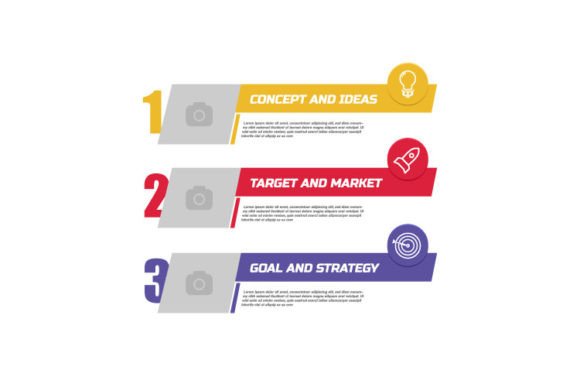
Mastering Visual Storytelling with Creative Infographic Three Steps Design
In a world where attention spans are shrinking and information overload is the norm, clarity is king. Whether you are a small business owner trying to explain your service process, an educator simplifying a complex concept, or a marketer aiming to boost engagement on social media, the way you present information matters just as much as the information itself. This is where the Creative Infographic Three Steps Design becomes an indispensable tool in your digital toolkit. It is not just a graphic; it is a structured approach to communication that breaks down complexity into digestible, actionable chunks.
The power of the three-step framework lies in its psychological simplicity. Humans are wired to recognize patterns, and the beginning, middle, and end structure is one of the most fundamental narratives we understand. By leveraging a pre-designed, professional template for this structure, you save hours of design time while ensuring your message lands with impact. But what makes these specific design files so versatile? It comes down to flexibility, quality, and ease of use across various platforms.
Why the Three-Step Structure Works for Everyone
Before diving into the technical specifics of the file formats, it is important to understand why this particular design layout is so effective for such a diverse audience. For entrepreneurs and freelancers, time is money. You do not have hours to spend aligning boxes and choosing fonts in design software. A ready-made Creative Infographic Three Steps Design allows you to plug in your content and move on to the next task. For educators and publishers, consistency is key. Using a standardized visual format helps students or readers follow along without getting distracted by chaotic layouts.
Consider the typical user journey. A potential customer lands on your website. They are not going to read a wall of text explaining how your product works. However, if they see three clear icons with brief descriptions—such as "Order," "Customize," and "Receive"—they instantly grasp the value proposition. This design acts as a visual shortcut, reducing cognitive load and increasing the likelihood of conversion. It transforms abstract ideas into concrete actions.
Versatile Applications Across Industries
The beauty of this resource is its adaptability. It is not confined to a single niche. Here is how different users can leverage these designs in real-world scenarios:
- Digital Marketers and Bloggers: Use the infographic to break down tutorial steps in blog posts. For instance, a cooking blogger can illustrate "Prep," "Cook," and "Serve" phases, making recipes look more approachable and shareable on Pinterest.
- Small Business Owners: Clarify your service process. A consulting firm might use it to show "Discovery," "Strategy," and "Implementation." This builds trust by showing clients exactly what to expect, reducing anxiety about the unknown.
- Educators and Trainers: Simplify complex historical events or scientific processes. A history teacher could outline the causes, events, and consequences of a major war, providing students with a clear study aid that is visually engaging.
- HR Professionals: Streamline onboarding materials. New hires can quickly understand the "Application," "Interview," and "Onboarding" stages, making the company appear organized and welcoming.
Each of these scenarios benefits from the clean, professional aesthetic that a well-crafted design provides. It signals competence and attention to detail, qualities that are crucial for building credibility in any field.
Understanding the File Formats: More Than Just Images
When you download a Creative Infographic Three Steps Design package, you are not just getting a static picture. You are receiving a suite of files tailored for different needs: Ai, Eps, Png, Jpg, and Svg. Understanding how to use each format ensures you get the most out of your purchase.
The Ai (Adobe Illustrator) and Eps (Encapsulated PostScript) files are vector-based. This means they are fully editable. If you have access to design software, you can change colors to match your brand identity, swap out icons, or adjust typography. This level of customization is vital for maintaining brand consistency across all your marketing materials. You are not stuck with a generic look; you make it yours.
For those who do not use professional design tools, the Png (Portable Network Graphics) and Jpg (Joint Photographic Experts Group) files are ready-to-use raster images. Pngs are particularly useful for web use because they support transparent backgrounds, allowing you to place the infographic over colored sections of your website without unsightly white boxes. Jpgs are ideal for email newsletters or social media posts where file size and compatibility are priorities.
The Svg (Scalable Vector Graphics) format is a modern favorite for web developers and designers. It scales infinitely without losing quality, making it perfect for responsive websites that need to look sharp on both mobile phones and large desktop monitors. Using SVGs can also improve page load speeds compared to heavy image files, contributing to better SEO performance.
Practical Tips for Implementation
Having the files is only half the battle. To truly benefit from the Creative Infographic Three Steps Design, you need to apply it strategically. First, keep your text concise. The design is meant to guide the eye, not overwhelm it. Use short, punchy headlines for each step and limit descriptive text to one or two sentences. Remember, the visual does the heavy lifting.
Second, consider color psychology. If you are editing the Ai or Eps files, choose colors that evoke the right emotion for your message. Blue often conveys trust and professionalism, suitable for financial or medical services. Orange or yellow can suggest energy and creativity, great for marketing agencies or fitness brands. Consistency in color usage helps reinforce brand recognition.
Third, think about placement. Do not hide your infographic at the bottom of a long article. Place it prominently where it can serve as a summary or a hook. In email campaigns, include it early to capture interest. On landing pages, use it above the fold to immediately communicate your unique selling proposition.
Making the Right Choice for Your Needs
Before downloading or purchasing, assess your technical comfort level. If you are not familiar with vector editing software, focus on the Png and Jpg versions. Ensure the resolution is high enough for your intended use, especially if you plan to print the design for brochures or posters. Low-resolution images can appear pixelated and unprofessional, undermining the credibility you are trying to build.
Also, consider the context of your audience. Are they viewing your content on mobile devices? If so, ensure the text in your chosen design is large enough to be readable on smaller screens. The scalability of the Svg format makes it an excellent choice for mobile-first strategies, as it adapts seamlessly to different screen sizes.
Ultimately, the Creative Infographic Three Steps Design is more than a decorative element. It is a strategic asset that enhances communication, saves time, and elevates the perceived quality of your work. By understanding how to utilize the different file formats and applying best practices for visual storytelling, you can transform simple information into compelling narratives that resonate with your audience. Whether you are decorating a presentation, designing a background for a video, or creating an element for a print ad, this tool offers the flexibility and professionalism needed to stand out in a crowded digital landscape.